Article by Bob Welch for the Fall 2025 Ranch Record.
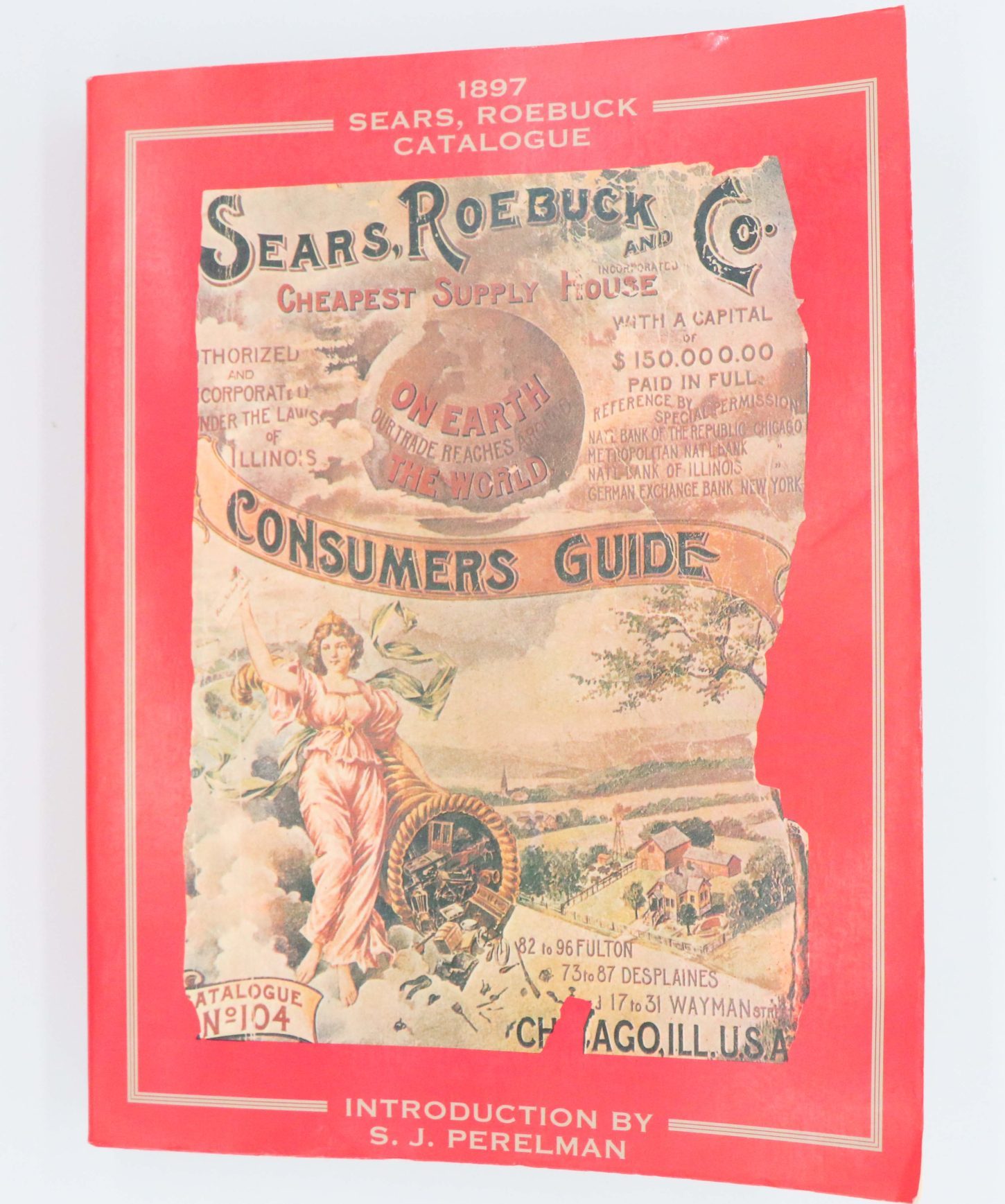
Sears, Roebuck and Co. 1897 Catalogue.
Today, when ranchers need a rope, a pair of gloves, a specific part for a piece of equipment or even food, they turn–like most of the rest of the U.S. population–to the Internet. Depending on location, a customer can place an order and within days have whatever they needed.
Before nearly everything in the world for sale was a few taps away on your favorite social media marketplace app, Amazon or National Ropers Supply, commerce moved more slowly. And for rural Americans at the turn of the century, a great deal of it went through the mail.
Several factors converged to make the mail-order shopping boom in the late 19th and 20th centuries. First, the nation began to feel the effects of the Industrial Revolution. Goods that were once made by hand by a single craftsman were being churned out with factory efficiency. Next, never-before-imagined products began to proliferate consumers’ imaginations. In cities, folks could buy these goods locally, but the far-flung rural populations driven West by the Homestead Act were isolated from these conveniences. Despite vast physical distances and slow travel, the world was becoming smaller. Rural Free Delivery in 1896 guaranteed direct delivery to rural destinations by federal post office. Later, the advent of parcel post alongside the expanding railroad networks allowed for affordable–if not quick–delivery of large packages across the U.S.
It was into this scene that Minnesotan watch salesman Richard Sears and watch-making partner Alvah Roebuck began selling watches via mail order catalog. In 1895 another partner, Julius Rosenwald, invested in the company and the next year the three expanded from watches to a general mail-order firm, according to the Sears Archives.
Whether they realized it or not, their timing was near perfect. An increasing wave of customers were isolating themselves on farms and ranches as the frontier opened to mass settlement. Without stores nearby, the Sears and Roebuck catalog became their connection to a burgeoning commercial scene.
Almost literally, Sears and Roebuck offered everything. From a hypodermic syringe to a poultry cape worm extractor to spurs to clothes to furniture to entire houses. Topping out around 600 pages and 100,000 items, the catalog became the most coveted piece of mail for the entire family. Eventually producing a spring and fall edition, farmers and ranchers could buy boots, hats and saddles while their wives could shop household wares and their children would pine after the latest toys.
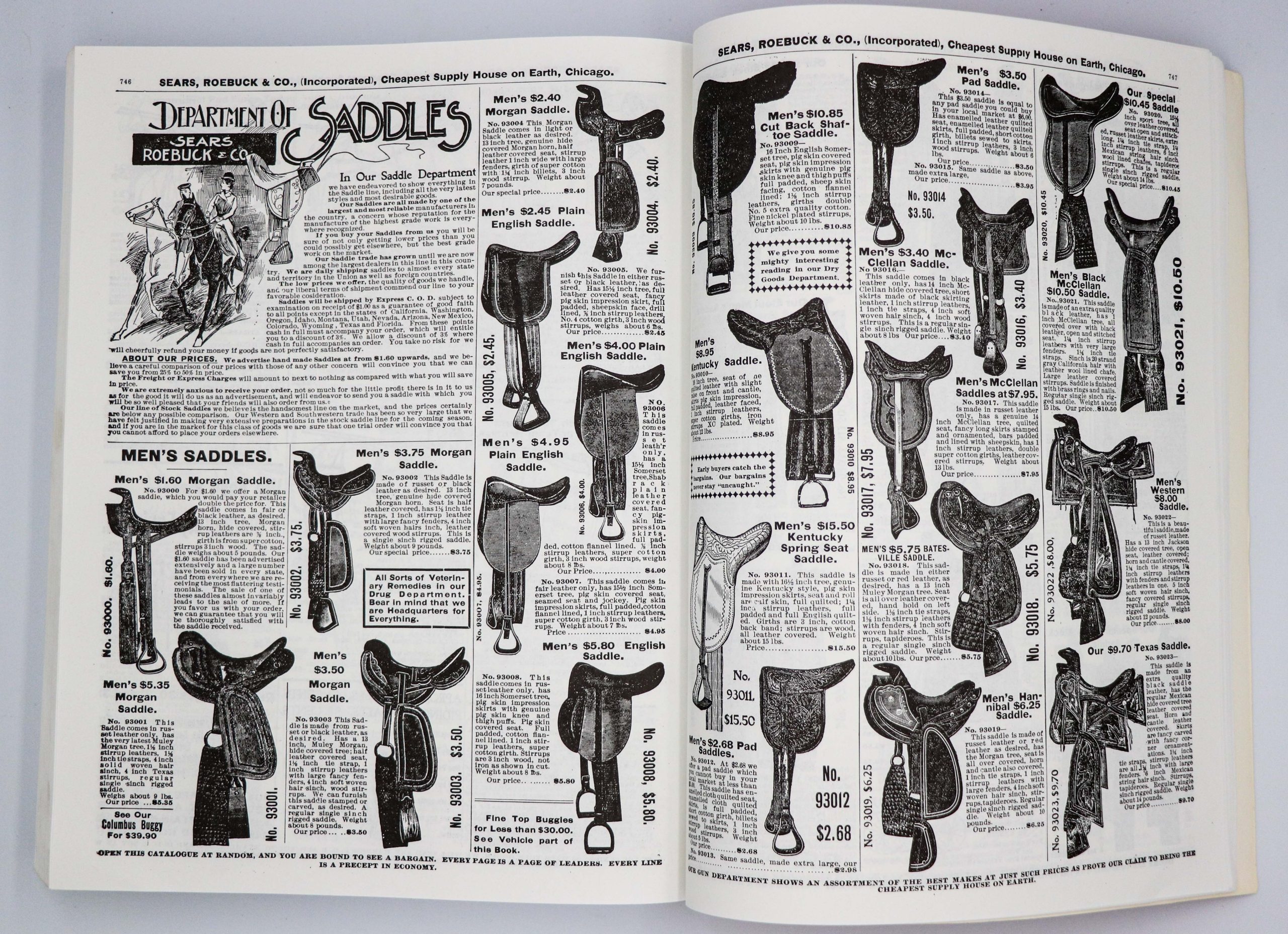
Department of Saddles in Sears, Roebuck and Co. Catalogue showcase a variety of saddle options ranging in prices from $1.60 to $9.70.
Richard Sears, who wrote almost all of the catalog’s copy himself until his retirement in 1908, held to the motto “We Can’t Afford to Lose a Customer,” making sure that Sears stayed competitive in terms of price and value. When Sears first sold stock to the public in 1906, the company was worth some $40 million, with close to $50 million in annual sales and around 9,000 employees. That same year, it built a distribution complex in Chicago with some three million square feet of floor space.
The company began to realize that their customer base was nearly all rural, so in 1924 it opened their first retail department store in Chicago. Within five years the company would open 300 more across the country. They launched Kenmore, an appliance brand, Craftsman for tools and Allstate for insurance. Not even the Great Depression stopped the company’s ascendancy.
The pinnacle of the company’s success was in 1974 when the famed Sears Tower was completed in Chicago. By then, the catalog had been re-branded as The Great American Wishbook.
Throughout the 1980s and 1990s the marketplace was changing. Despite their efforts to change with it, Sears struggled. In 1993 they announced their last catalog. In 1994 Sears Tower was sold In 1995, Amazon.com sold its first book. Shoppers, however, can still buy online from Sears.
Folks in rural communities these days still do plenty of shopping online, but the brick-and-mortar feed stores, ranch supply stores, parts and equipment stores and even cowboy trappings trade shows still thrive–especially in a time of renewed interest in backyard farms and traditional rural living.
Even Before the Catalog…
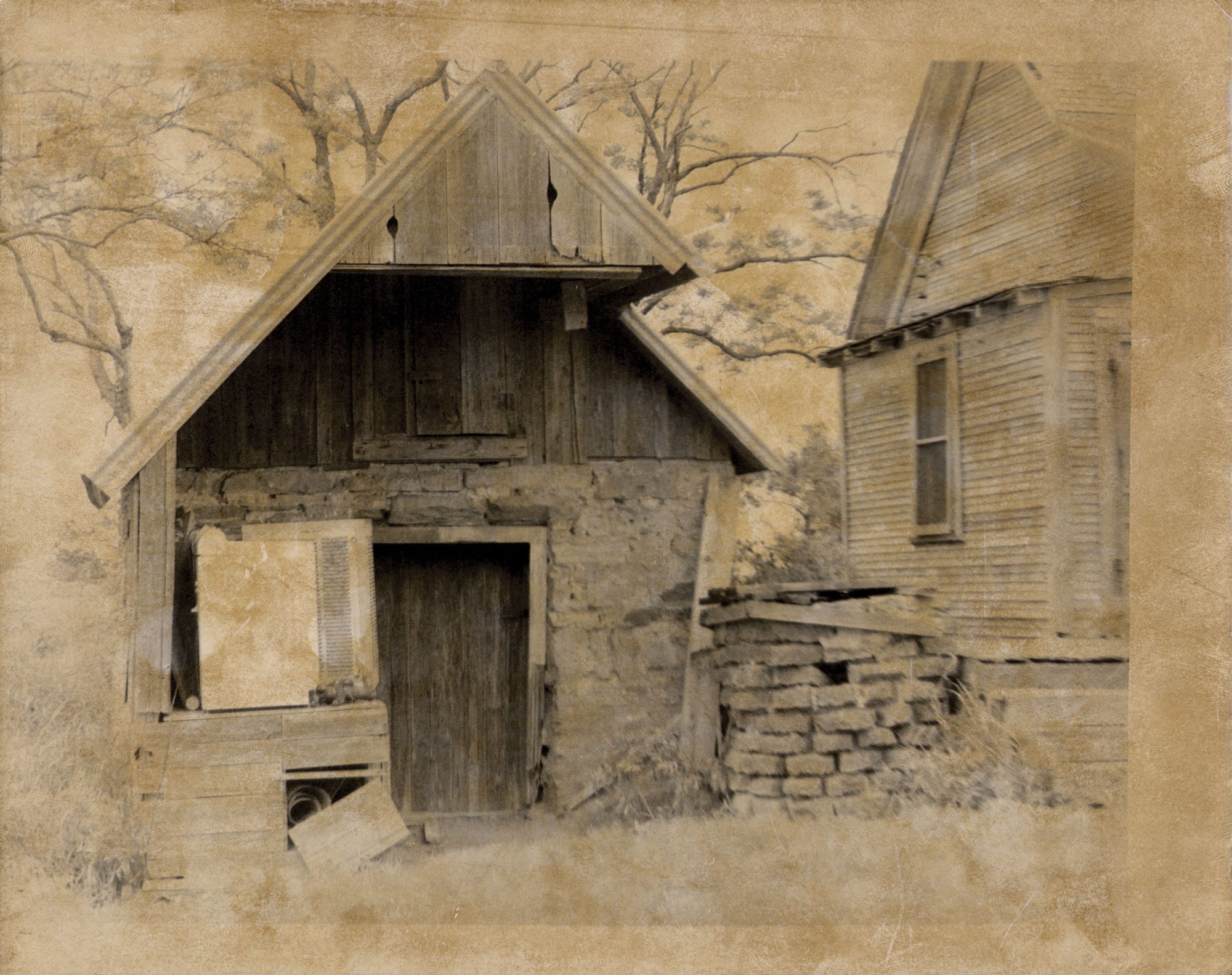
The c. 1885 Waggoner Ranch commissary served cowboys on the vast Waggoner Ranch, providing them with essential products like food, clothing and gear.
Even before the advent of the Sears and Roebuck Catalog, cowboys and ranchers needed supplies on the raw frontier. While the earliest settlers were forced to harvest their own food and do without the luxuries of the time, as ranches became fenved and settled, they would build company supply houses–or commissaries– to provide supplies to their employees.
An example of one of these stands at the National Ranching Heritage Center. The Waggoner Commissary, built around 1885, was the supply hub for the Waggoner Ranch–once one of the largest ranches in Texas. More than just a storehouse, it helped keep cowboys fed clothed and equipped across hundreds of remote miles. Its survival today is a testament to the scale and organization behind one of Texas’s most iconic cattle empires.
Daniel Waggoner founded the ranch in the early 1850s after arriving in Texas in 1848. His son, W.T. Waggoner, expanded it into a 500,000-acre powerhouse by the 1880s. W.T. chose where China Creek meets the Red River as the site for the ranch’s headquarters for its water, grass and central location.
The commissary was the lifeline for cowboys working miles from headquarters. Most carried everything they needed on their saddle or in a bedroll. Cowboys learned to pack light, cook simple meals over a fire, and stretch supplies for weeks. The commissary kept them going, one bag of beans and coffee at a time.
Here’s what they might pick up on a supply run:
- Flour
- Coffee
- Sugar
- Beans
- Salt pork or bacon
- Dried fruit (apples, raisins, peaches)
- Lard or grease
- Hardtack or soda crackers
- Molasses or syrup
- Gloves
- Bandanas
- Needles and thread
- Pocketknife
- Lantern fuel
- Soap
- Ammunition
- Tobacco and rolling papers
- Canned peaches or tomatoes
- Chocolate or candy
- Playing cards
- Store-bought biscuits or jerky