Article by Sue Hancock Jones for the Spring 2026 Ranch Record.
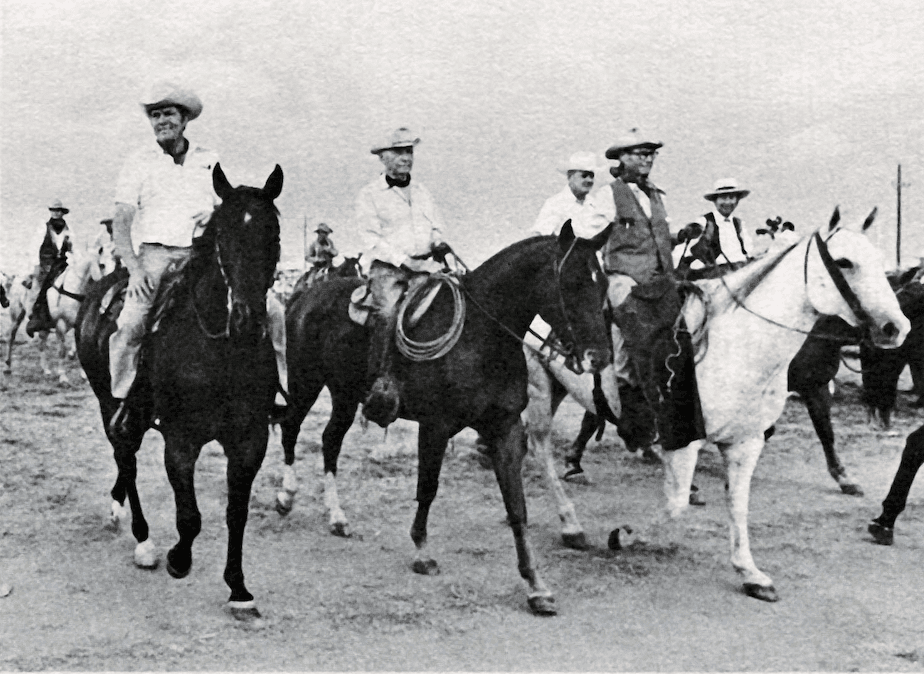
Film and television star Dale Robertson and Texas ranchers Watt Matthews and Charles Schreiner III rode horseback with RHA members as a week-long cattle drive passed through five cities and downtown Lubbock to reach the opening of the Ranching Heritage Center.
If the birth of an idea has an anniversary, then the historic ranch museum at Texas Tech University is 60 years old. If an idea needs boots on the ground, an impressive grand opening, hills and trees and thousands of visitors, then July 2026 will mark the 50th anniversary of the National Ranching Heritage Center.
Mrs. Lyndon B. Johnson spoke in the main gallery of the Ranching Heritage Center 50 years ago on July 2, 1976, and praised the pioneers who “worked, endured and built…in a forbidding land.” During those four days of celebration, movie and television star Dale Robertson rode horseback with Ranching Heritage Association members as they climaxed a Longhorn steer trail drive led by Charles Schreiner III of the YO Ranch near Kerrville.
The symbolic cattle drive started a week earlier, moving Longhorns through the streets of San Antonio, Kerrville, San Angelo, Stamford, Midland and downtown Lubbock until they reached the opening of the Ranching Heritage Center.
Nearly 25,000 visitors toured the center during the four days of opening activities, and an estimated 8,000 more witnessed the arena activities, dedication ceremonies and related events. The grand opening was truly grand.
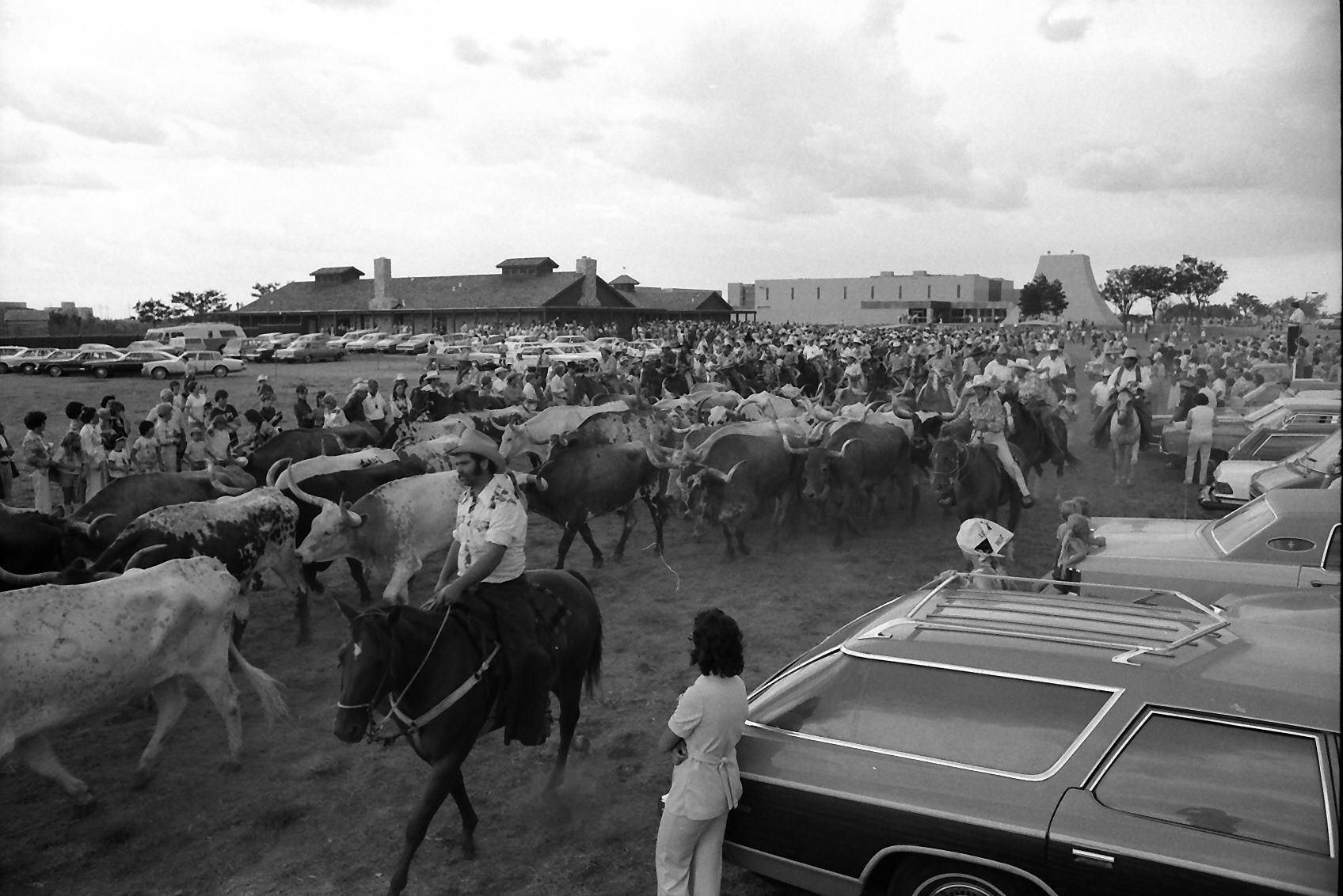
The bicentennial cattle started in San Antonio, passing through five cities to it’s final destination at the grand opening of the Ranching Heritage Center on July 2, 1976.
How Did It Start?
“How early ranchers adapted to a harsh frontier environment is a story told by the structures they built,” explained Jim Bret Campbell, executive director of the National Ranching Heritage Center in Lubbock. “It is difficult in this century to find clear recollections of ranch life on the frontier, but much of the early era of ranching is reflected and preserved in the historic structures at our center.”
When and where did an idea of a living history ranch museum lead to the opening of the Ranching Heritage Center? The barren plains of Texas and the beauty of Norway normally have nothing in common, but a 1966 visit to an outdoor history museum in Norway created the birth of an idea in the mind of Texas Tech President Grover E. Murray. It was there that he conceived the idea of developing an outdoor museum to preserve and interpret the history of ranching in North America.
Murray sat down with historian Dr. W. Curry Holden to discuss Murray’s vision for a multicultural museum complex that would represent the birth, growth and maturity of ranching west of the Mississippi River as Colonial Williamsburg represents the nation’s history east of the Mississippi.
Murray’s concept included a display idea for a living history ranch headquarters, but transforming his plan from an idea to a reality took 10 years, a multitude of helpers and guidance by Dr. Holden.
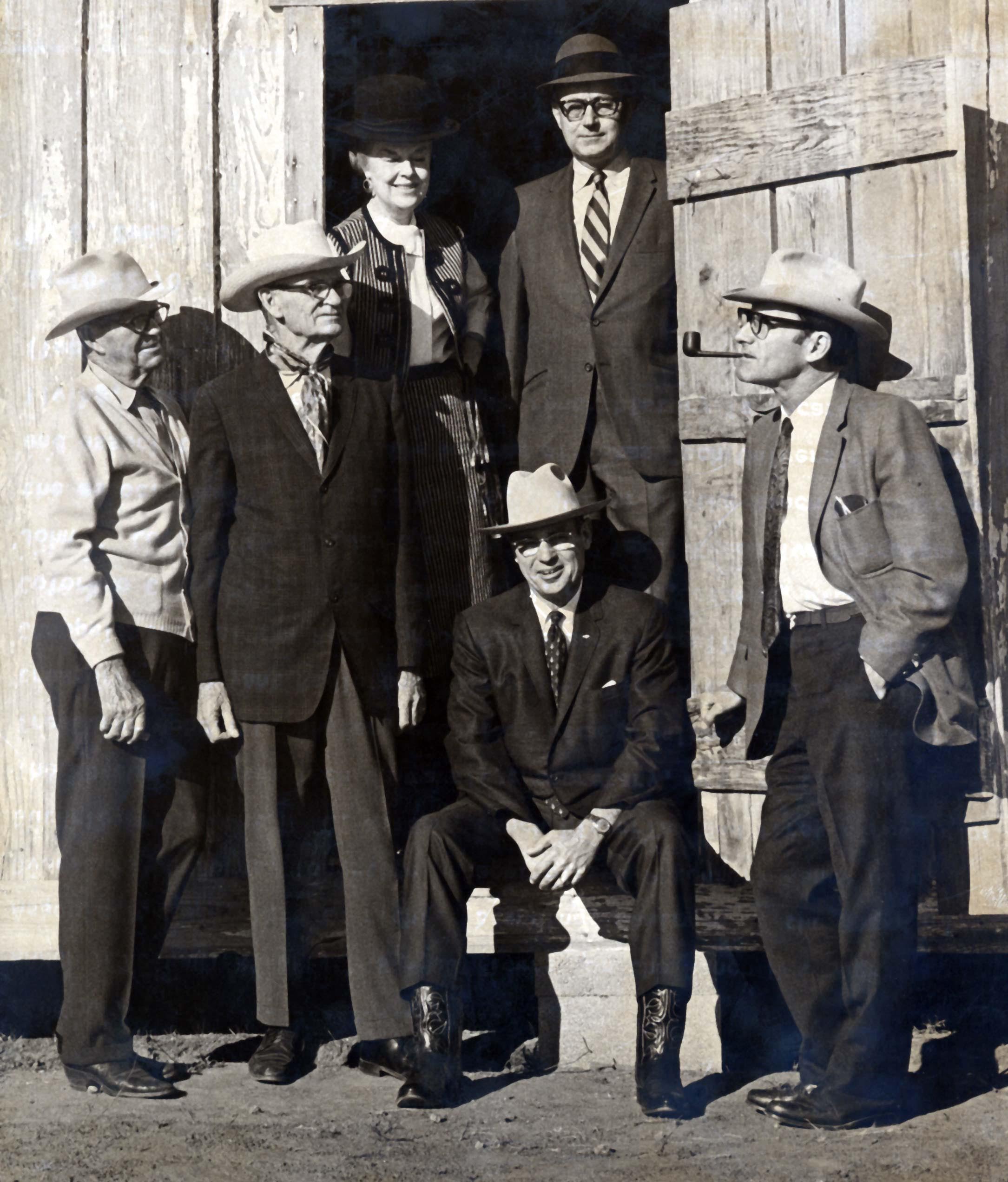
Today’s Ranching Heritage Association (RHA) began in the late 1960s as the Ranch Headquarters Association. Officers included D Burns, chairman of the Board of Overseers; Dr. W. C. Holden, president; Mrs. W. C. Holden, secretary; Robert L. Snyder, treasurer; John F. Lott Sr. (seated), vice president; and Frank H. Chappell Jr., vice president.
Not only was Dr. Holden a noted historian who had written three books dealing with Texas ranching, but he also was a Texas Tech Horn Professor in the Department of History and had been director of the West Texas Museum at Texas Tech from its beginning until 1965. He knew museums, and he knew ranching. Dr. Grover Murray and Dr. W. Curry Holden were the perfect match.
Dr. Holden and his wife Frances, a graduate of Texas Tech with a master’s degree in history, became invaluable to achieving Murray’s goal of developing a ranch headquarters comparable in its authenticity to Williamsburg and Mount Vernon. By representing ranching from the 1780s to the 1950s, the ranch headquarters would be a monument to the Old West.
In 1966, a virtual Who’s Who list of area ranchers as well as business and professional men and women met with Murray in the Pioneer Hotel in Lubbock to plan a ranching association that initially would be named the Ranch Headquarters Association and serve as a nonprofit educational corporation organized to assist the university in development of the ranch headquarters.
By 1969 the RHA support organization had become a 501(c)(3) nonprofit member organization and changed its name to the Ranching Heritage Association, the name it has today. Since its inception in 1966, the RHA has assisted in development by raising funds for the museum and for upkeep of the historical park as well as for sponsoring events, exhibitions and education programs.
In the Beginning
In an address to the annual convention of the Texas and Southwestern Cattle Raisers Association in 1967, Dr. Murray said details of “the historically vital” project would be developed by Dr. and Mrs. Holden as co-chairs and would include well-known ranchers D Burns, John F. Lott Sr., Frank H. Chappell Jr. and Howard Hampton.
Dr. Murray laid out his plan.
“It will include a dugout as used in the 1870s by cattlemen as a headquarters and later as a line camp,” he said. “It will contain a box and strip house and an authentic down-to-the-last-square-iron nail, starkly furnished, typical of the house built in 1885 when the first lumber was hauled in from remote rail points.
“Plans call for a nearby windmill with an elevated tank and the mill house. The major and imposing ranch house of the 1910 period (after a cattleman had built up a sizeable operation) would be built either of wood or stone. It will be in character from the coal oil lamps to a rosewood piano.”
The Texas Tech president said every item of the buildings and their furnishings “will be the real thing.” He cited a chuck house, bunkhouse, blacksmith shop and ranch barn as examples. “Everything must be authentically furnished to give the impression the owner just stepped out the door,” he said.
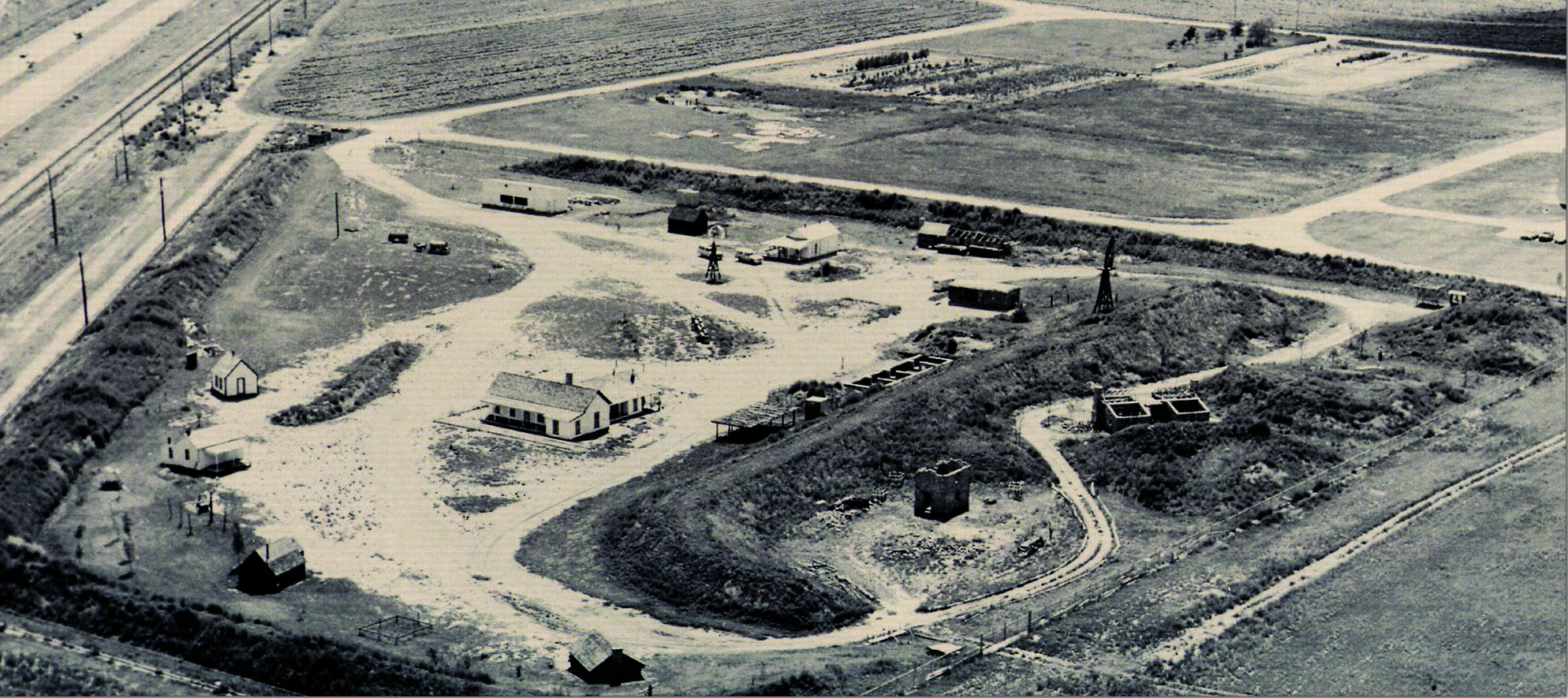
The 12-acre historical park had so few buildings in 1970-71 that it only opened to visitors for one day in October. By 1974, the site had three windmills and 19 buildings in the process of restoration.
Dr. Murray explained that the project will be “along the same lines as Williamsburg. What Williamsburg is to the eastern seaboard, the Ranch Headquarters will be to our part of the country. “He predicted the Ranch Headquarters “could become a major tourist attraction.”
Fifty-four years later Murray’s prediction became a reality when TripAdvisor, the world’s largest online travel site, placed the NRHC in its Hall of Fame for consistently earning a Certificate of Excellence as a result of high ratings from travelers.
Searching for Historic Structures
The RHA arranged to acquire several historic ranch structures and expanded the exhibit concept to include an historical park called the Ranch Headquarters to represent the growth period of ranching. They formed committees to locate and design a Ranch Headquarters that would be part of the museum complex already being formed on campus within the new Museum of Texas Tech University.
By 1968 the Ranch Headquarters Planning Committee enlarged to include David Kritser of the Kritser Flying Diamond Ranch in Amarillo, Watt Matthews of Lambshead Ranch at Albany, Charles Schreiner III of the YO Ranch near Kerrville, architect W.G. McMillan Jr. of Lubbock, Christine DeVitt of the Mallet Ranch in Hockley County and Elizabeth Connell of the Lazy D Ranch near Snyder.
From 1970 through 1971, the 12-acre site was opened to visitors for one day in October for the Ranching Headquarters Association annual meeting. Volunteers in period dress presented activities, and three buildings were available and staffed by volunteers. Guests were treated to entertainment and demonstrations.
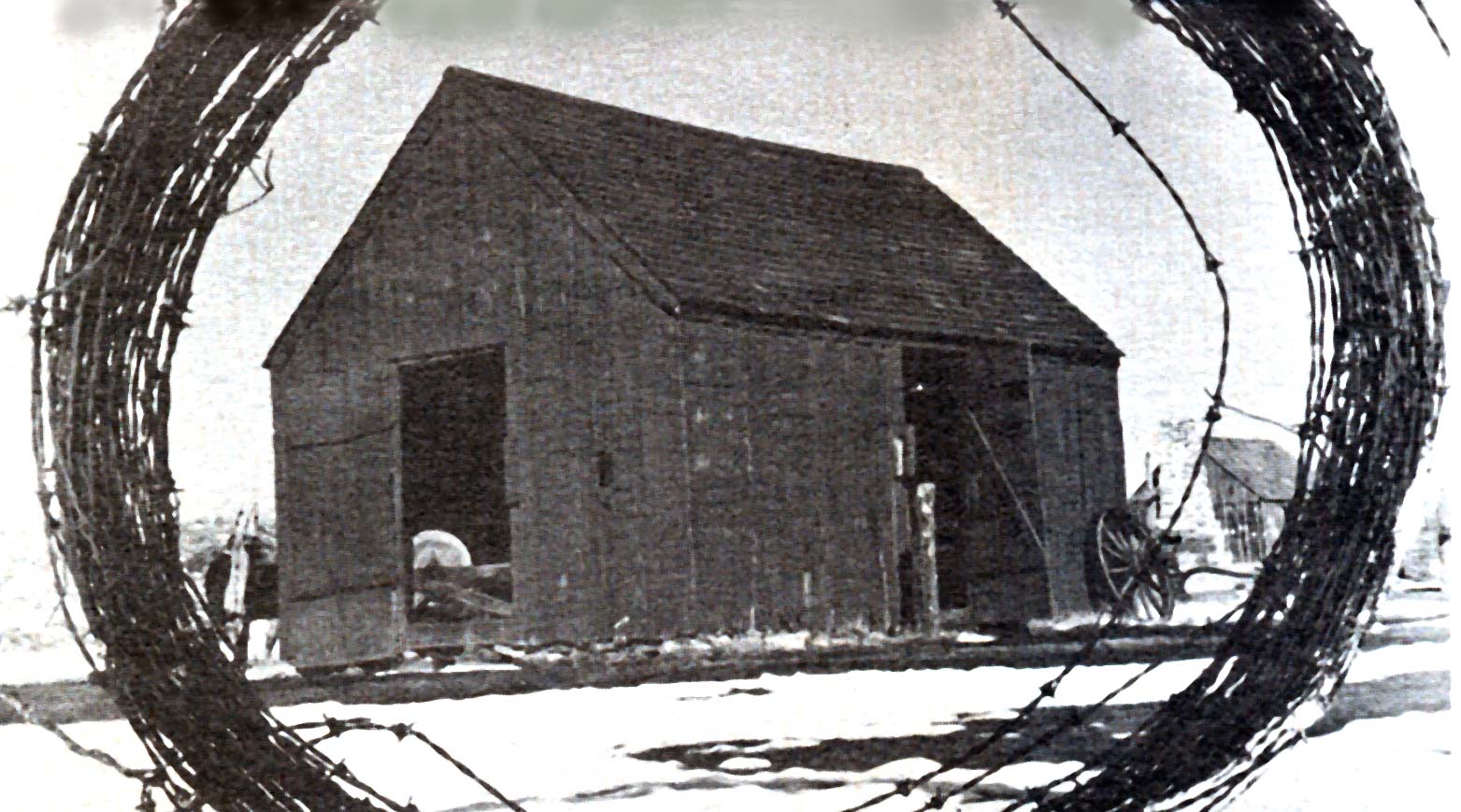
The Renderbrook Spade Ranch blacksmith shop was the first structure to stand at the newly created Ranch Headquarters.
The blacksmith shop from the Renderbrook Spade Ranch became the first structure to stand at the newly created Ranch Headquarters. The Milk and Meat House from the JA Ranch was the first building to arrive, but it was still disassembled from the move when the blacksmith shop was brought to Lubbock.
The 1905 box-and-strip upper story to the two-story dugout arrived in 1971 from the Lazy S Whiteface Camp near the town of Whiteface. The upper story needed to be placed over a dugout such as the one C.C. Slaughter had used to house his Lazy S line camp manager. Workers in the historic park had to dig a dugout and then line it with concrete blocks for stability before dirt walling the dugout.
The donation and arrival of these buildings marked such a success for ranch museum planners that the Texas Legislature appropriated funding for further preparation of the site.
By 1974 the Ranch Headquarters had three windmills and 19 buildings installed on site with restoration in progress. By 1975 the name of the museum was changed to the Ranching Heritage Center and an official opening date was set for 1976 to coincide with the United States Bicentennial Celebration.
Today the 19-acre historic park contains 55 ranching structures representing the 1780s to the 1950s.
Creating a Ranch Day Tradition
Don Workman of Lubbock was general chairman of the first RHA membership meeting on Oct. 3, 1970, with about 1,350 participants. Bo Brown and George Sell coordinated the second annual meeting and Ranch Day in October 1971.
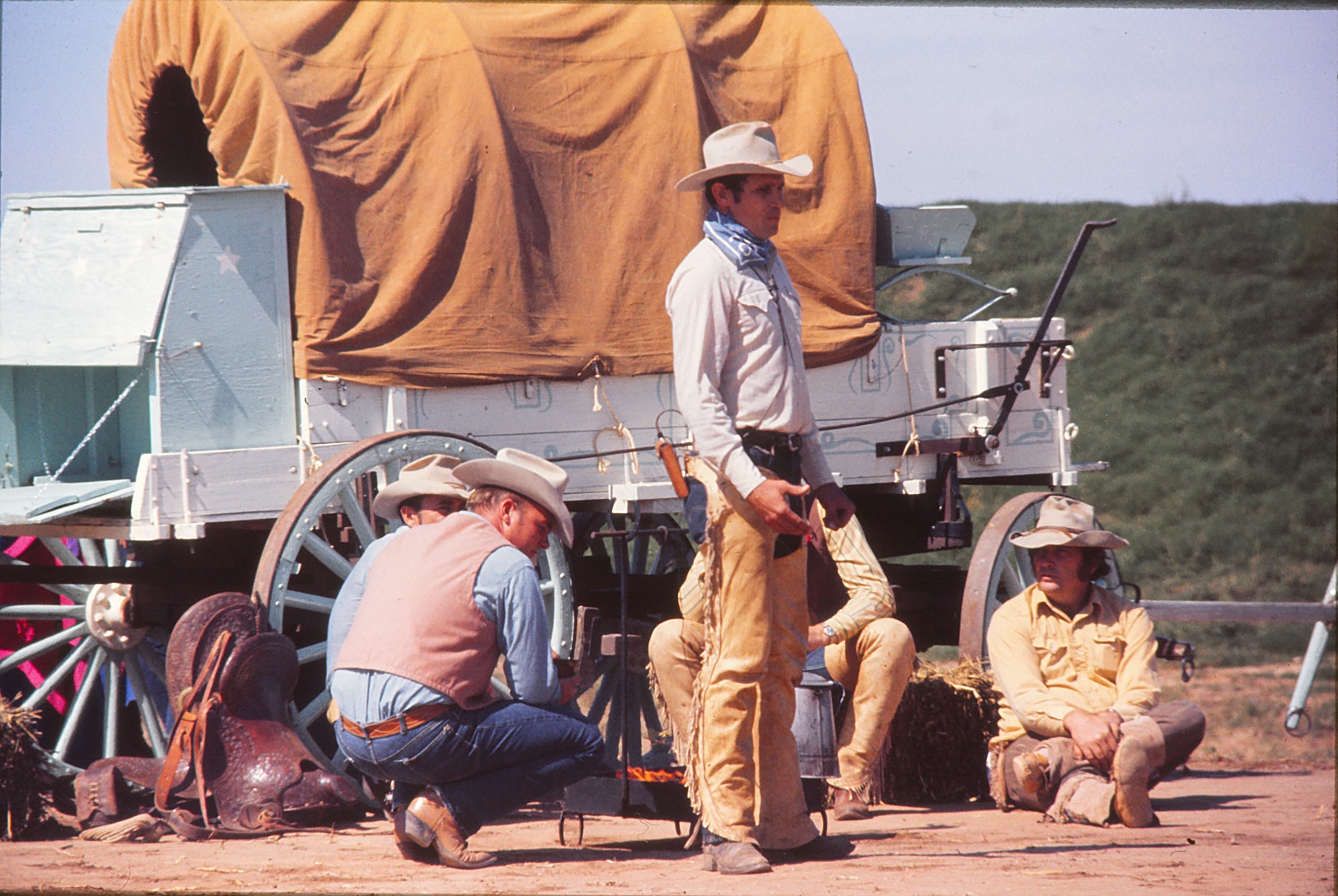
Cliff Teinert (standing), Ronnie Nail and Bud Leach performed a “sampler” from the Albany Fandangle, which is an outdoor play almost all of the Albany community participates in, during the 1971 Ranch Day.
As co-coordinator of one of the earliest RHA events, George Sell today describes his younger self in 1969 and the early ‘70s as “just a fly on the wall—a young kid trying to learn what was going on.” He must have succeeded because RHA membership in 1971 totaled 2,000 members from 30 states.
“If I had to identify one person as a key figure in those days, it would be Curry Holden,” Sell said. “He was such a driving force. Holden had a remarkable mind and a great vision of what the Ranching Heritage could be.
“The park was pretty barren. We created the berms with rubble from Lubbock’s 1970 tornado damage. Back then the berms were just bricks and stone covered with dirt and not a grass covering like you see today. I specifically remember when they were digging out the bricks of the streets downtown. Those bricks were used to make the patio.”
Ranch Day didn’t officially get its name until 1972 when Gov. Preston Smith attended and declared October 7 as Ranch Day in recognition of the Ranch Headquarters’ efforts “to preserve the ranching heritage and its visual symbols.”
From that day forward, Ranch Day became a regular event with an official name.
Growth and Expansion
The name of the historic park and the museum building changed as the acreage changed and as new donors became interested in preserving and interpreting ranch history.
As diverse as the activities were at the Ranching Heritage Center, it was sometimes forgotten that the RHC was still part of the Museum of Texas Tech. The board of the Ranching Heritage Association began to petition the Texas Tech University Board of Regents for a separation so the RHC could further develop.
In 1998 that separation was made and the Ranching Heritage Center was reorganized as an individual museum and historical park. The name of the center changed in 1999 to the National Ranching Heritage Center to reflect the bigger influences of the museum.
By 2009 the historical park contained 48 historic structures portraying the rich heritage of ranching.
The museum continued to grow as it acquired realistic outdoor art and built permanent art and artifacts collections. Significant additions to the main building more than doubled the museum’s size and included the Christine DeVitt Wing and the north addition with its Red McCombs Main Gallery and 6666 Ranch Main Entrance Plaza.
NRHC Expands and Enlarges
In 2001, the center purchased the first six life-size bronze steers and continued to add to the herd until 19 bronzes of Longhorns were sculpted and placed in a natural setting in front of the museum building. The herd of Longhorns is the focal point of J.J. Gibson Memorial Park and was dedicated during a ceremony on Sept. 19, 2003. The park-like area was named to honor the memory of longtime Four Sixes Ranch Manager J.J. Gibson of Guthrie, Texas.
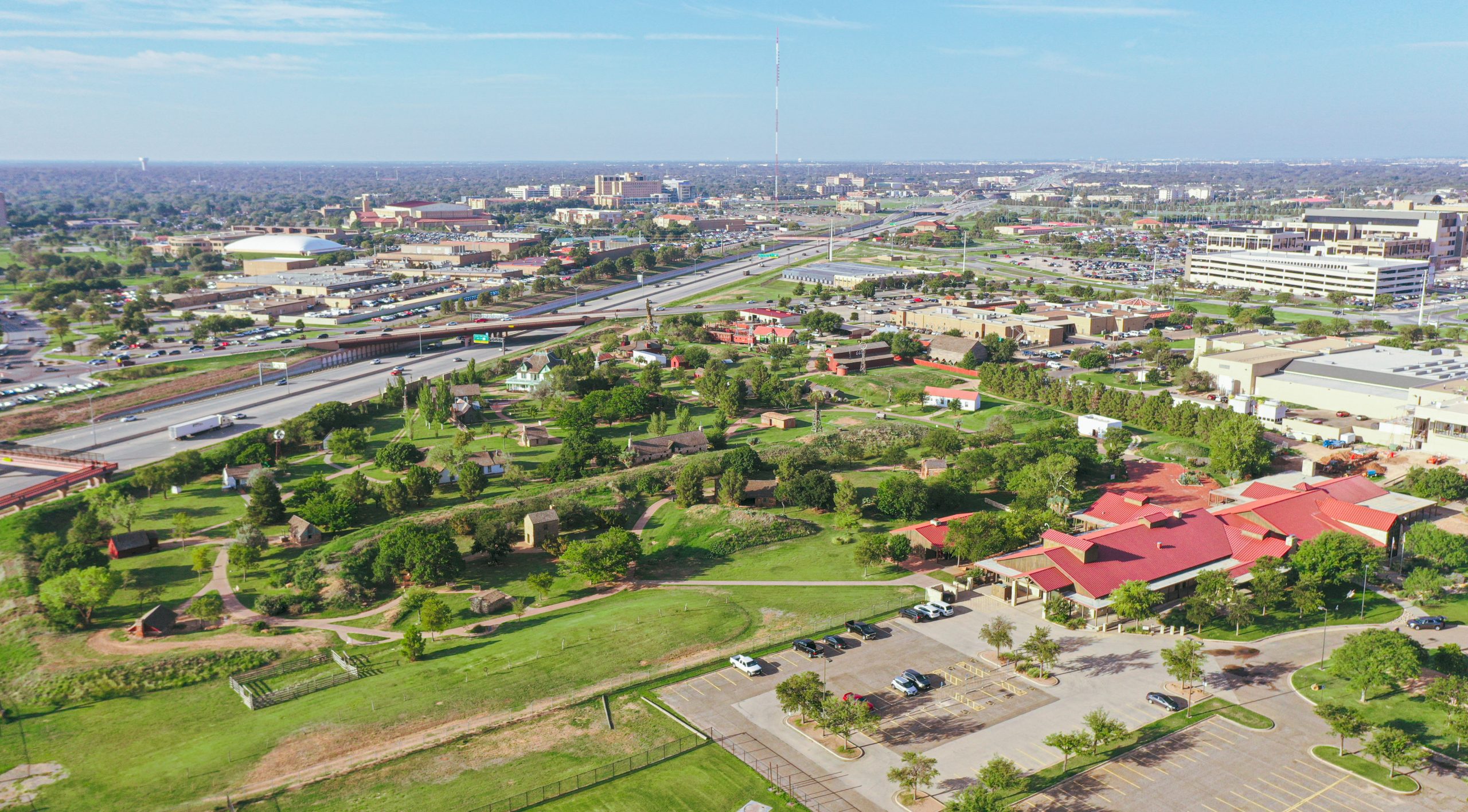
Today, the 19-acre historic park has 55 ranching structures representing the 1780s to the 1950s.
The NRHC teamed with Charles Hodges Development Services in Dallas and artist Terrell O’Brien and Eagle Bronze of Lander, Wyoming, to develop the bronze herd. Each animal carries the brand of its donor, including some of the most historic ranches in Texas. The steers were cast in a variety of poses to resemble a herd walking to commemorate the Texas Trail Drive Era of the 1860s to the 1880s.
In 2006, the primary museum and office building became the DeVitt-Mallet Ranch Museum after the $3 million Christine DeVitt Wing was added to provide staff offices, museum storage, curatorial workspace, an education room and a board room.
The main building was named to honor the late David M. DeVitt, founder, owner and manager of the Mallet Ranch in the Texas counties of Cochran, Hockley, Yoakum and Terry. As a young man he was a newspaper reporter for the Brooklyn (New York) Eagle in 1882 and was sent to write a story on the development of the ranching industry on the West Texas free range. The final result of his visit was DeVitt establishing the Mallett Land and Cattle Co. 21 years later, managing 52,000 acres of ranch land and discovering oil on those acres.
His daughters, Christine DeVitt and Helen DeVitt Jones, became well-known philanthropists and established foundations from the Mallet Ranch revenue. They used the money to support educational institutions and social and cultural programs, including the National Ranching Heritage Center museum and historical park.
Funds for the wide patio behind the main building were donated in 1976 by Ann and Trent Campbell in memory of his parents, Richard Thomas Campbell and Elizabeth Keen Campbell. The Campbell Patio was constructed from the same brick pavers that cover Broadway Avenue in Lubbock.
In 1999, the Texas Tech Board of Regents designated 16 acres of the NRHC as Proctor Park in honor of Foy Proctor (1896-1988), who owned cattle ranches in Texas, New Mexico and Arizona and had a cattle-buying partnership in Nebraska. In 1984, he received the National Golden Spur Award honoring his leadership in the livestock industry.
Although 12 acres were initially set aside for the ranching center, the acreage grew to 16 acres by 1999. Today the historic park alone covers 19 acres while the entire NRHC complex includes more than 30 acres and a 44,000-square-foot museum with seven galleries.
Cogdell’s at the Ranch, the museum gift shop, is located in the main building and named in recognition of a donor family who has been an important part of West Texas ranching heritage.
“We run the store like a business,” Campbell said. “Where it used to contribute $20,000 to the center, the store now makes an $80,000 contribution to the RHA annually.”
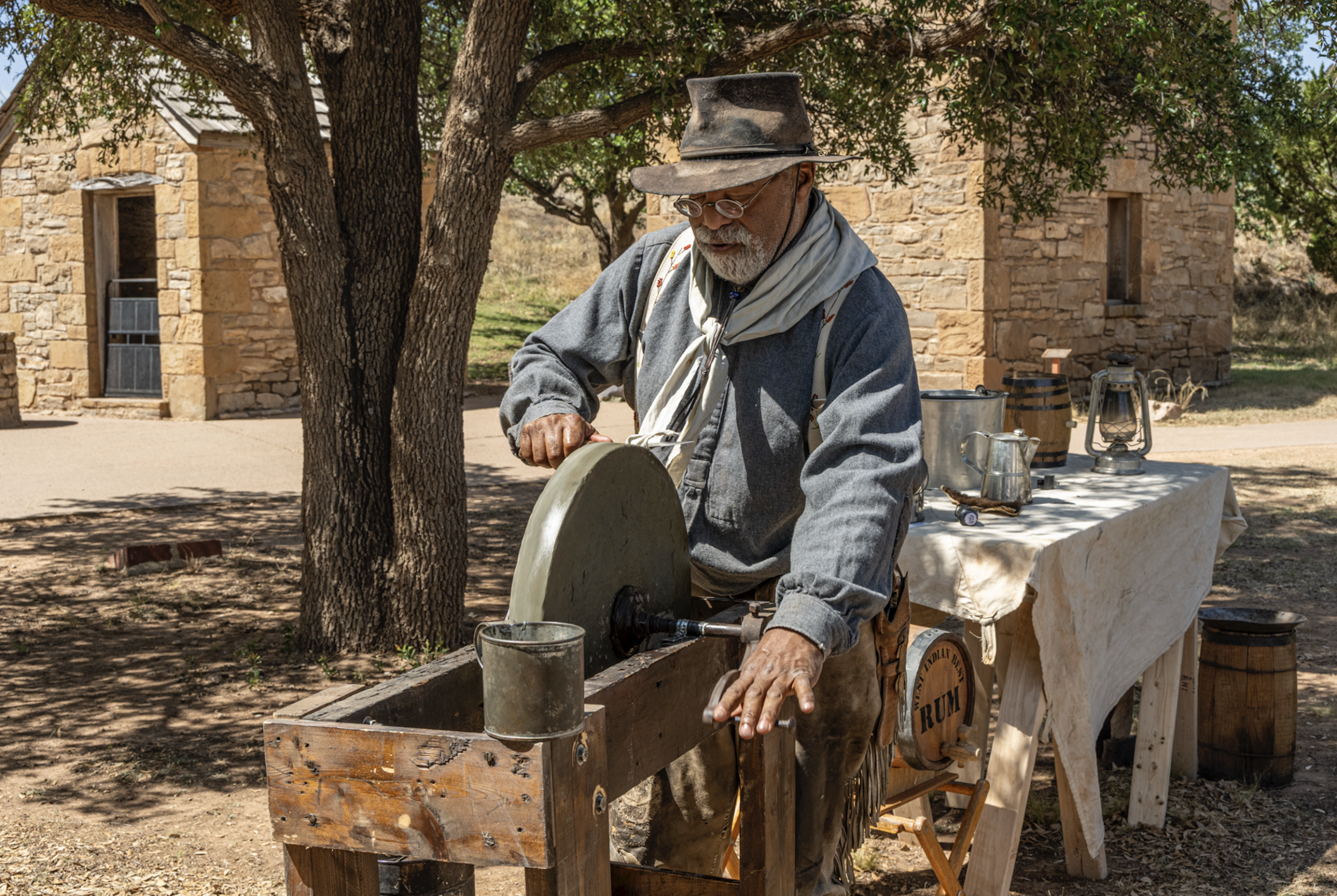
Ranch Host Henry Crawford recreated a buffalo soldier’s camp during the 2026 Ranch day.
The National Ranching Heritage Center has more than 75,000 visitors a year from throughout the world and annually hosts 5,000 to 8,000 children on school field trips. More than 160 community volunteers assist in the educational programs of the center, and special public events require 200 to 250 volunteers, many dressed in period clothing.
Volunteers at the NRHC are called Ranch Hosts and have their own Ranch Host Association with elected officers and periodic training meetings. It’s not unusual for a Ranch Host to spend 5 to 25 years volunteering at the NRHC. Some hosts choose to involve their entire family and might greet guests at the door or sit at a table looking like a 19th-century ranch family having supper.
With Growth Came Leadership
In 1978, the RHA joined five other livestock and ranching organizations in presenting the annual National Golden Spur Award to iconic livestock industry leaders. In addition, the RHA began in 2018 to award the Working Cowboy Award in recognition of outstanding men and women who make their living in the saddle, taking care of livestock and the land on a daily basis. Fifty-two ranchers have been honored with either the National Golden Spur Award or the RHA Working Cowboy Award.
Jerry L. Rogers became the first director of the center from 1969 to 1972. Over the lifespan of the NRHC, the center has had 12 directors or administrators. Originally the center not only had RHA officers but also a Board of Overseers appointed by the Texas Tech president upon recommendation of the RHA Committee. The Board of Overseers was discontinued in 2010, and the NRHC is led today by the executive director and the RHA executive committee.
Jim Bret Campbell became executive director in 2017 and serves in a leadership role with RHA executive officers Frank McLelland, president; John Welch, vice president; Betsy Bellah, secretary-treasurer; and Mark Kirkpatrick, past president. Other members of the Executive Committee are Andra Cantrell, Clay Cash, Jay Evans, Sarah Fitzgerald, Andy Gray, Larry Hobbs, Jim Jennings, Joe Leathers, Barbara McKenzie and Cody White.
“The history represented at the NRHC is priceless and unique to the United States,” explained McLelland. “The stories of success and failure, triumph and tragedy are all part of our history in the West. As others have said, ‘How do we know where we are going if we don’t know where we have been?’ The NRHC is full of signposts that mark our way through the history of the western United States and especially the ranching industry.
“At the end of the day, people make history and it all boils down to the values and character of those people. The values I’m talking about are values that have stood the tests of time and adversity. Values like integrity, loyalty, honesty, kindness, bravery and fearlessness were all necessary to make a go of it in the West 150 years ago. Our structures, our exhibits, our volunteers and the stories we tell evoke those values and more. Those values are at least as important today as they were then.
“The NRHC and RHA embody those values and principles. I think that’s why so many people come to the NRHC. People are instinctively drawn to it. We have seen literally thousands of people stand in lines half a mile long in extreme weather to come through the facility during Candlelight at the Ranch and Ranch Day, when the place is alive with volunteers.”
A New Vision for the Future
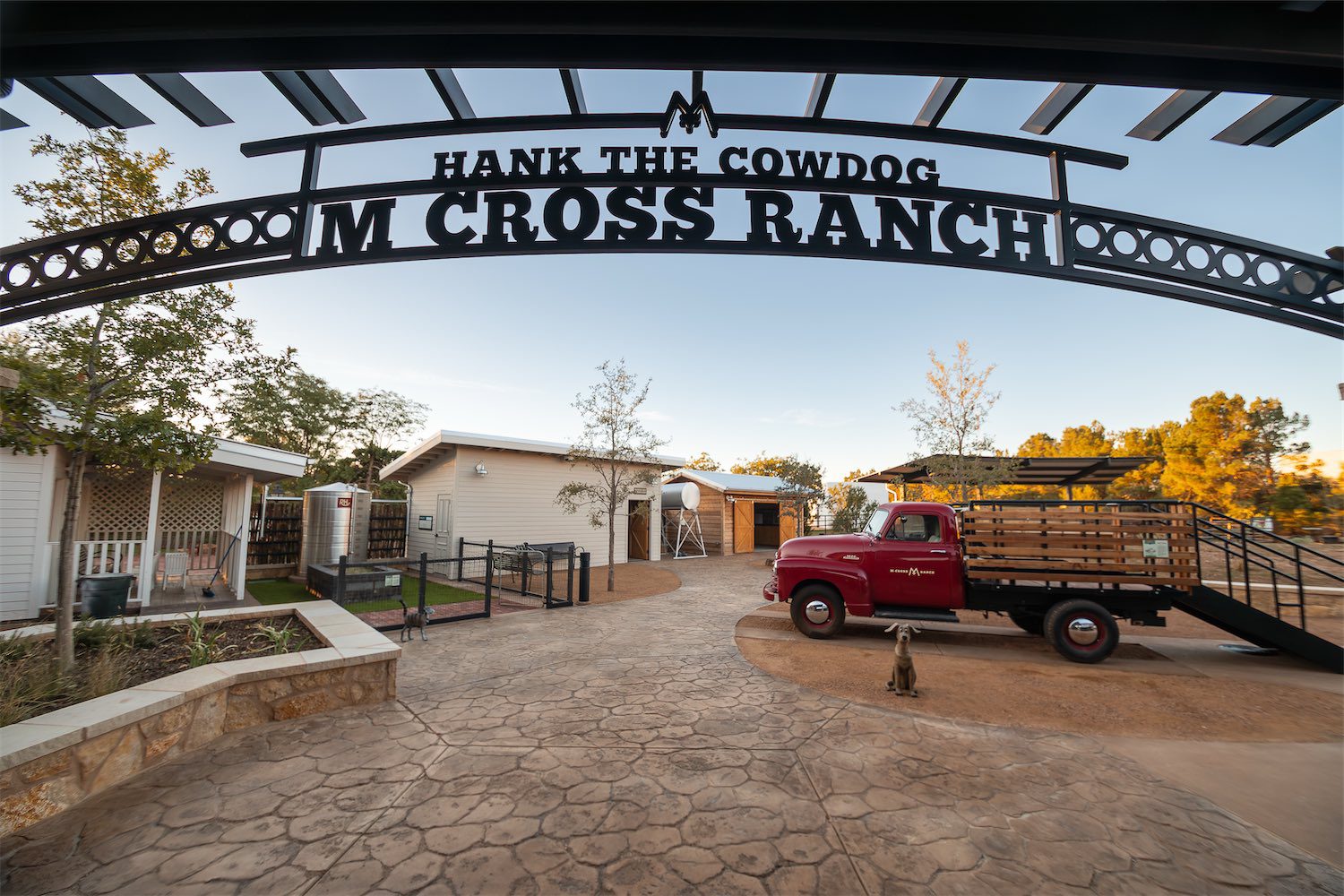
Author John R. Erickson and his “Hank the Cowdog” books have become new partners in telling the ranching story through the Ranch Life Learning series and curriculum and the Cash Family Ranch Life Learning Center.
For more than 50 years the NRHC has worked to keep the history and heritage of ranching in front of a mainstream audience, but the audience has changed through the decades. A high percentage of Americans today are at least three to five generations removed from agriculture and most don’t have a basic understanding of food or agriculture.
“We want to continue telling our story of heritage and history,” Campbell said, “but our staff started to realize that many people coming through our door don’t have a clear idea of what a ranch is. We have more than 75,000 visitors a year, but history may not be the only story we need to tell when so many people have a real disconnect with agriculture.”
In 2017 rancher and author John Erickson was already well-known in the ranching heartland and parts of urban America. He had sold millions of his Hank the Cowdog children’s books and had a fan base of several generations growing up on Hank books, but they were all fiction adventures.
Erickson began partnering with the National Ranching Heritage Center to write what grew into five nonfiction Hank books in Hank’s voice to educate readers about ranching. Julie Hodges, NRHC Helen DeVitt Jones Endowed Director of Education, worked with school curriculum specialists to create lesson plans and an activity guide for each book.
The books humorously teach readers about ranch life and include livestock basics, ranch wildlife, ranch hands, horses, weather and ranching as a business. The Ranch Life series has been accepted as part of the National Ag in the Classroom curriculum and are part of their downloadable resources through the Cogdell Store at the NRHC or Maverick Books.
“Thousands of books have gone out to more than 550 school districts in four states that we know of, and many more we don’t know of because some schools just downloaded the files from the website,” Campbell said.
Every Hank book that goes into a home, school or library is a seed planted into a setting that may need to know chocolate milk doesn’t come from brown cows and cowboys still exist by the thousands. For reasons hard to explain, people listen to a scruffy, smart-alecky super sleuth dog.
The addition in 2023 of the new $8.2 million Cash Family Ranch Life Learning Center as a complement to the existing 19-acre historical park marks a new phase in the mission of a center that for five decades has focused on ranching history.
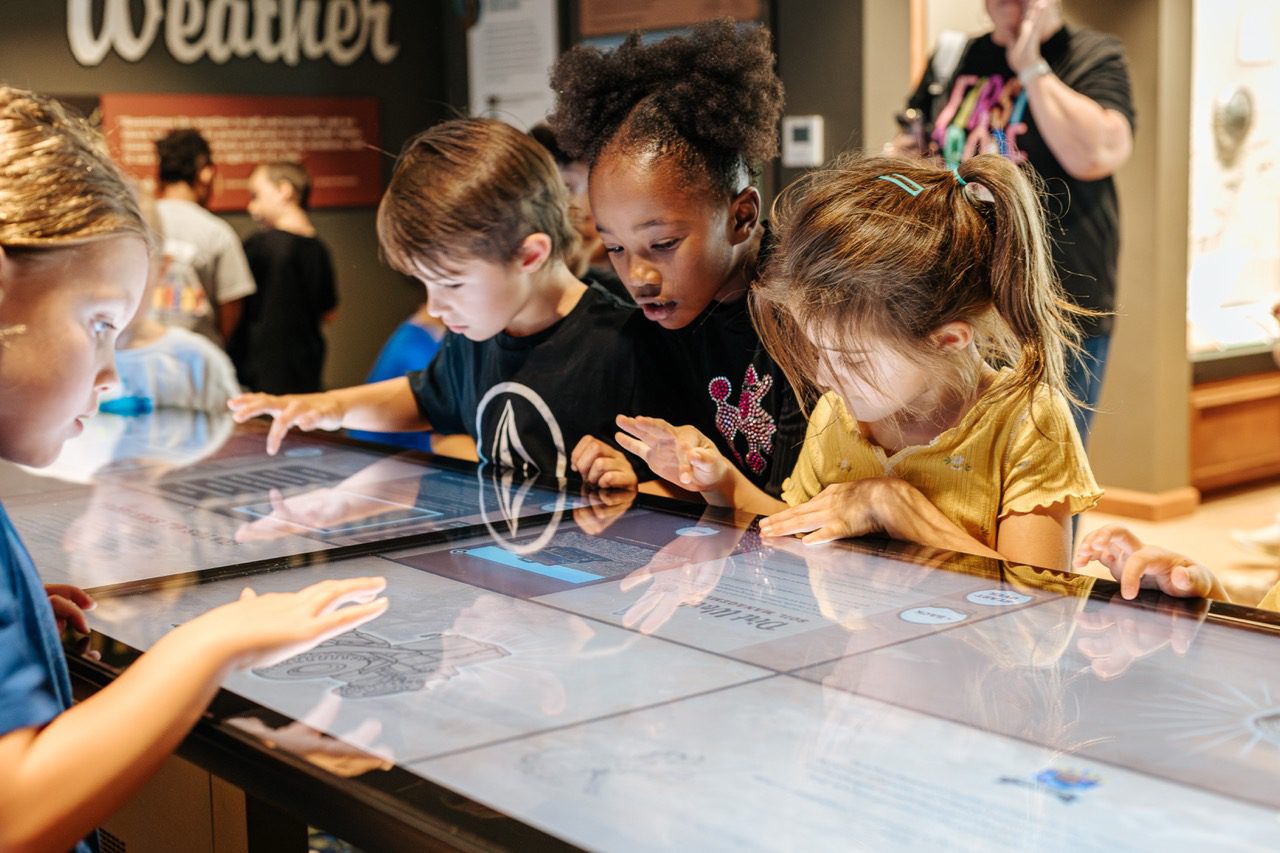
After five-decades of focusing on ranching history, the addition of the Cash Family Ranch Life Learning Center also helps tell the ranching story to new audiences who are further removed from agriculture and where their food comes from.
When the Cash Family Foundation gave a lead gift of $3.5 million — the largest single gift in NRHC history — nearly 90 additional donors contributed gifts to build the new learning center and forge a new emphasis in the NRHC mission.
The NRHC events alone wind up being a whole business focus because of how much effort the center puts into them — Ranch Day, Summer Stampede, Ranch Verse, Golden Spur, Candlelight at the Ranch and more.
“Those are critical ways that we tell our story and there was a time when those were our main focus,” Campbell said. “They are still a huge focus, but now we are doing all of these other things in addition to events.”
The center has built long-term partnerships across education, agriculture, philanthropy and industry. In February the NRHC hosted more than 30 invited partners for a Ranch Life Summit to explore how everyone can collectively expand agricultural literacy through Ranch Life Learning at the center.
“The summit centered around how to teach — especially kids — where food and fiber comes from,” Campbell said. “Since that time Julie’s phone has been blowing up with partnership opportunities. That group has already committed to being back together in six months and continuing the conversation about how to build additional partnerships.”
The center’s founders 50 years ago were rebuilding historic structures to tell the ranching story. Today, with 2,000 members in 50 states and four foreign countries, the NRHC is building partnerships not only to tell the ranching story but also the food and fiber story. Through its efforts in ranch life learning, the NRHC is helping expand agricultural literacy to understand real ranching with real cowboys in a world where grass turns into beef.
Creating The Red Steagall Institute
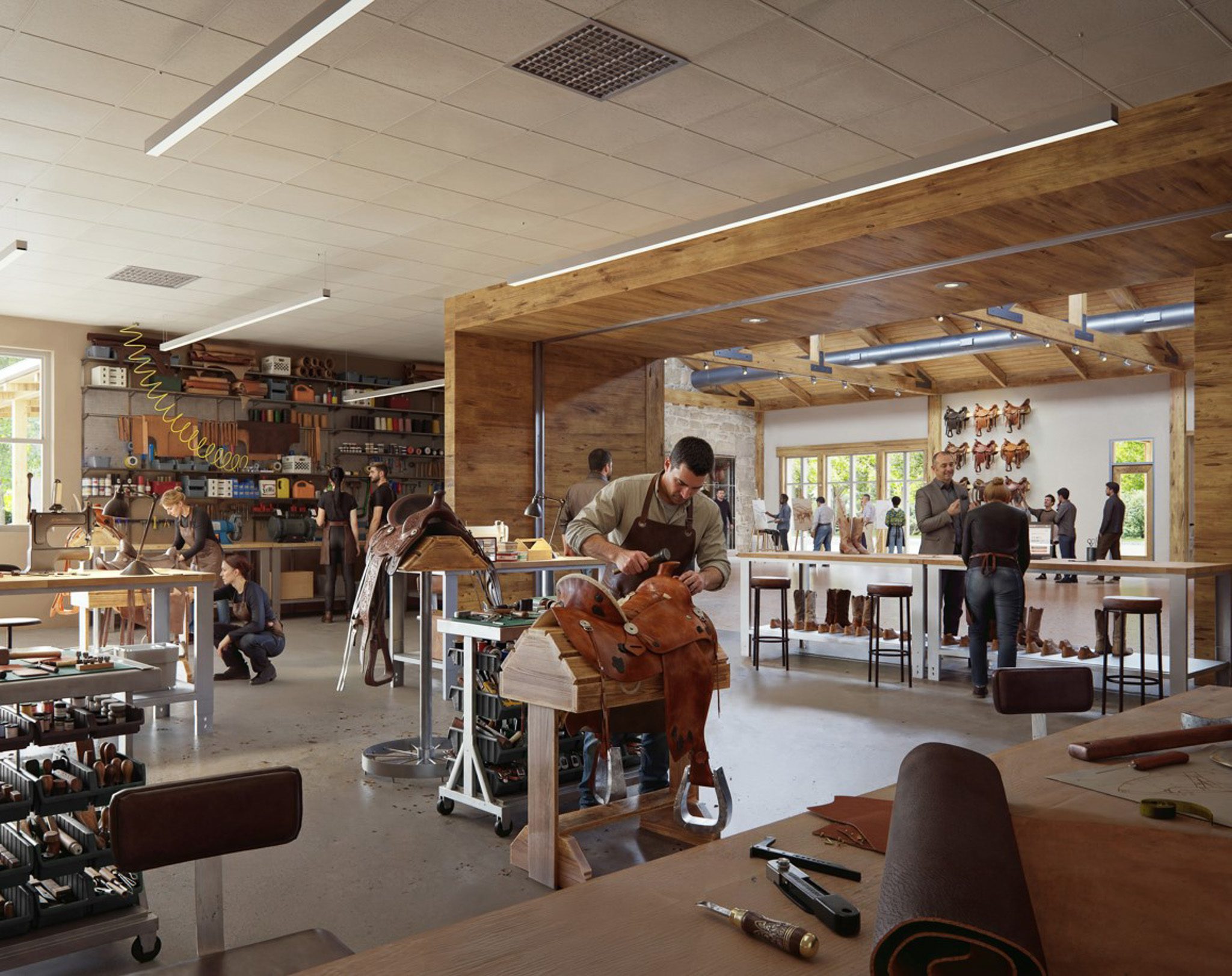
The Red Steagall Institute for Traditional Western Arts will be a learning institute dedicated to preserving, passing forward and providing the public with rich stories told through traditional Western art. (renderings are conceptual.)
Architectural plans and funding efforts are underway for the newest addition to the NRHC. The Red Steagall Institute for Traditional Western Arts will honor excellence in Western writing and music, leatherworking, metalworking, painting and sculpture.
“The institute will not be a museum or a hall of fame,” Campbell said. “It will be a learning institute dedicated to preserving, passing forward and providing the public with rich stories told through traditional Western art. Through full-time workshops and studio spaces, masters in residence will demonstrate for the public and scholars the techniques of their trade, including bit and spur making, painting and sculpting, song and poetry and the written word.
“These pieces not only will be properly housed and cared for by preservation specialists, but they also will be available to the public for viewing, examination and study. These treasures won’t be tucked away never to be seen again or lost to time. The goal is to make them accessible for generations to come.”